
“What is this worth?” sounds like one question, but the useful inputs change with the asset. A cryptocurrency estimate needs a current market quote. A currency conversion needs an exchange rate for the selected date. A precious-metal calculation depends on weight, purity, and spot price. A collectible coin adds year, mint mark, condition, variety, surface problems, and demand.
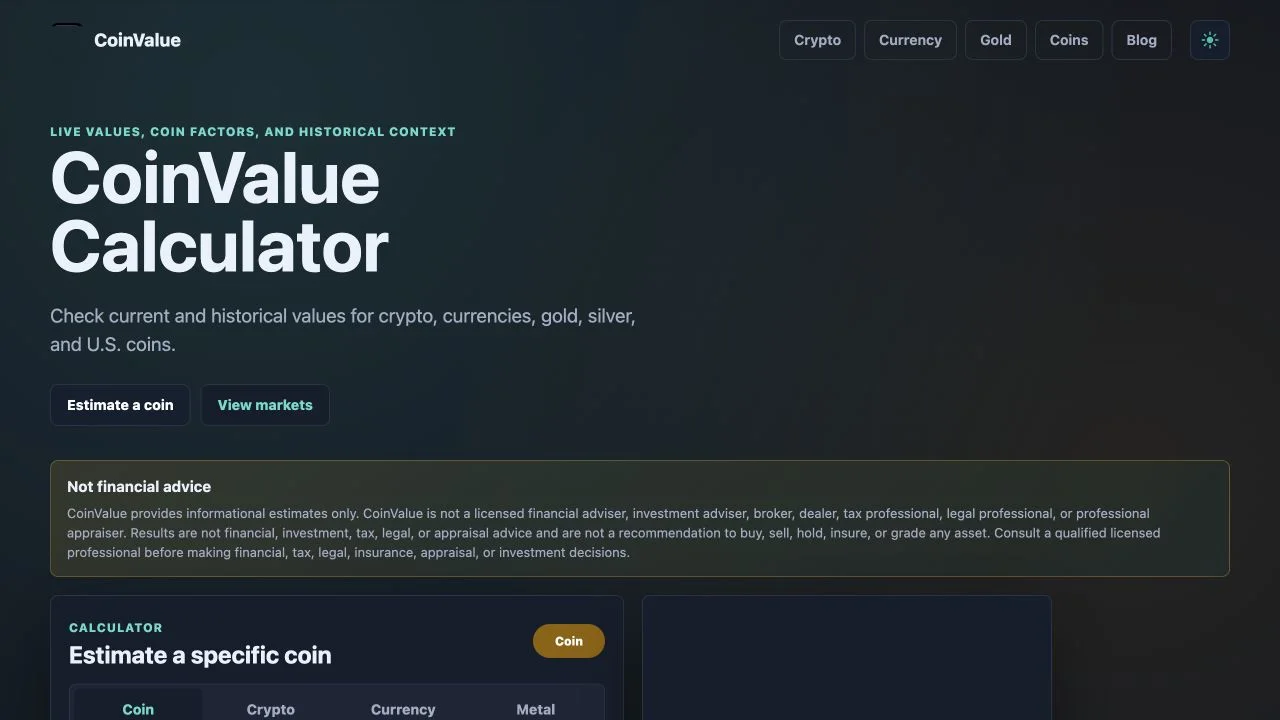
CoinValue Calculator brings those paths into one public tool. It offers separate modes for coins, crypto, currencies, and metals, then shows the source and reasoning details that apply to the selected calculation.
Review note: App9.org reviewed the live calculator and completed its default Morgan silver dollar estimate on August 2, 2026. Market values change, so this article intentionally does not preserve the displayed dollar amount as an evergreen fact. The result is an informational estimate, not an appraisal or financial recommendation.
CoinValue Calculator at a glance
- Four calculator modes: Coin, Crypto, Currency, and Metal.
- Date-aware: the interface accepts a valuation date and a quote currency.
- Coin-specific inputs: issue, year, mint mark, condition, variety/error signal, surface condition, and certification.
- Transparent result details: source date, confidence, factor breakdown, and—where relevant—face, melt, and collectible estimates.
- Important boundary: estimates cannot authenticate, professionally grade, or appraise a physical coin.
Four calculators, four different questions
Coin mode
Coin mode is the most detailed path. The current asset list includes common U.S. cents, nickels, dimes, quarters, half dollars, silver dollars, and bullion coins, along with selected Canadian, Mexican, and British issues.
After selecting an issue, the visitor can specify the number of matching coins, valuation date, quote currency, year, optional mint mark, condition band, variety or error signal, surface condition, asking price, and whether the coin is certified. Junk-silver shortcuts provide faster entry for common face-value lots.
Crypto mode
Crypto mode is aimed at current or historical market conversion rather than collectible condition. The public page labels cryptocurrency market cards with CoinGecko, whose price API documentation explains how price queries can include a last-updated timestamp.
Currency mode
Currency mode converts between fiat currencies for the selected date. The product’s documented source path includes Frankfurter, an open exchange-rate service that publishes current and historical reference-rate access.
Metal mode
Metal mode uses metal type, quantity, purity, and a dated price source to estimate value. The visible interface also includes market cards and ratios for gold and silver. Because spot prices move, the update label is part of the result—not a minor footnote.
What happened in our hands-on coin estimate
We used the calculator’s default Morgan silver dollar setup and selected Calculate value. The completed result separated the estimate into components rather than showing only one large number.
The result included:
- the issue and valuation date;
- a confidence label;
- unit and face values;
- a melt-value estimate based on silver content and the displayed metal price;
- a collectible estimate;
- a grading-worthiness signal;
- a factor list covering issue, year, condition, surface, variety, and demand assumptions; and
- a source link with an update timestamp.
The factor breakdown is the most useful part of the experience. It makes clear that the output is a model of the supplied facts, not direct evidence that the physical coin is authentic or that another buyer will pay the estimated amount.
Why a melt value and collectible estimate can differ
A silver coin can have at least two very different sources of value. Its metal content creates a melt-value reference. Its date, mint mark, scarcity, preservation, variety, and collector demand may add a premium—or reduce what a buyer is willing to pay when the coin is cleaned or damaged.
The U.S. Mint’s history of the Morgan dollar notes the standard issue’s 26.73-gram weight and 90-percent-silver composition. Those physical specifications help establish a metal-content calculation, but they do not establish the grade, authenticity, variety, or market premium of a particular coin in someone’s hand.
That is why CoinValue asks for condition and surface information and still labels the result as an estimate. Two coins with the same date can differ substantially when one has a scarce mint mark, a recognized variety, stronger eye appeal, or a problem surface.
What the calculator can help you do
| Useful task | How CoinValue helps | What remains outside the calculator |
|---|---|---|
| Initial coin research | Organizes issue, date, mint, condition, surface, metal, and variety factors. | Authentication, exact grading, and a binding appraisal. |
| Estimate a silver or gold floor | Combines metal content, quantity, purity, and a timestamped market price. | Dealer spreads, refining costs, local demand, and transaction terms. |
| Convert crypto or fiat values | Uses the selected asset, quote currency, date, and labeled market source. | Trading fees, taxes, liquidity, slippage, and future price movement. |
| Consider whether grading research is worthwhile | Compares the estimate with an assumed grading-and-shipping cost. | The grader’s actual opinion, turnaround, attribution, and realized sale price. |
What it cannot tell you from a form
A calculator cannot inspect weight tolerances, dimensions, magnetism, edge details, luster, cleaning, tool marks, altered surfaces, or counterfeit diagnostics unless a qualified person performs those checks. It also cannot guarantee a grade from a visitor’s self-selected condition band.
Before buying, selling, grading, insuring, or reporting a valuable item for tax or estate purposes, compare recent sold records and recognized guides, inspect the object, and consult a qualified numismatist, appraiser, tax professional, or financial professional as appropriate.
Financial and appraisal disclaimer: CoinValue’s results and this review are informational only. They are not financial, investment, tax, legal, insurance, grading, authentication, or appraisal advice, and they are not a recommendation to buy, sell, hold, grade, or insure an asset.
Our take
CoinValue Calculator is most useful when treated as a research organizer. It gives different asset types different inputs, timestamps market information, and explains the factors behind a coin estimate. That transparency is more valuable than a bare number.
The responsible next step depends on the asset. A casual currency conversion may need nothing more. A potentially valuable coin should move from calculator research to physical inspection, comparable sales, and qualified advice.
You can try CoinValue Calculator and review the source date and assumptions shown with your result. Change one input at a time if you want to understand which factor is moving the estimate.
Sources
- CoinValue Calculator, live interface reviewed and tested August 2, 2026.
- U.S. Mint: One Hundred Years of Silver Dollar Coinage.
- CoinGecko API: Coin Price by IDs, Symbols, or Names.
- Frankfurter exchange-rates API documentation.