
Phone calls are one of the harder tools to add to an automated workflow. A normal software integration can send a request and receive structured data; a phone call has to ring, connect, handle a live conversation, and turn the outcome back into something the rest of the workflow can use.
CallOnline is an App9 phone API designed around that gap. Its public product surface brings calling, callbacks, transcripts, summaries, webhooks, and structured results together for AI agents and developer-built workflows.
Review note: App9.org reviewed the public CallOnline product page and documentation links on August 2, 2026. We did not place a live phone call, so this is a product-interface and workflow review—not an independent test of call quality, transcription accuracy, delivery rates, or coverage.
CallOnline at a glance
- Best suited to: developers and teams connecting an agent or application to a phone workflow.
- Publicly described capabilities: outbound and inbound calls, callbacks, scheduling, voicemail detection, transcripts, summaries, structured JSON, and webhooks.
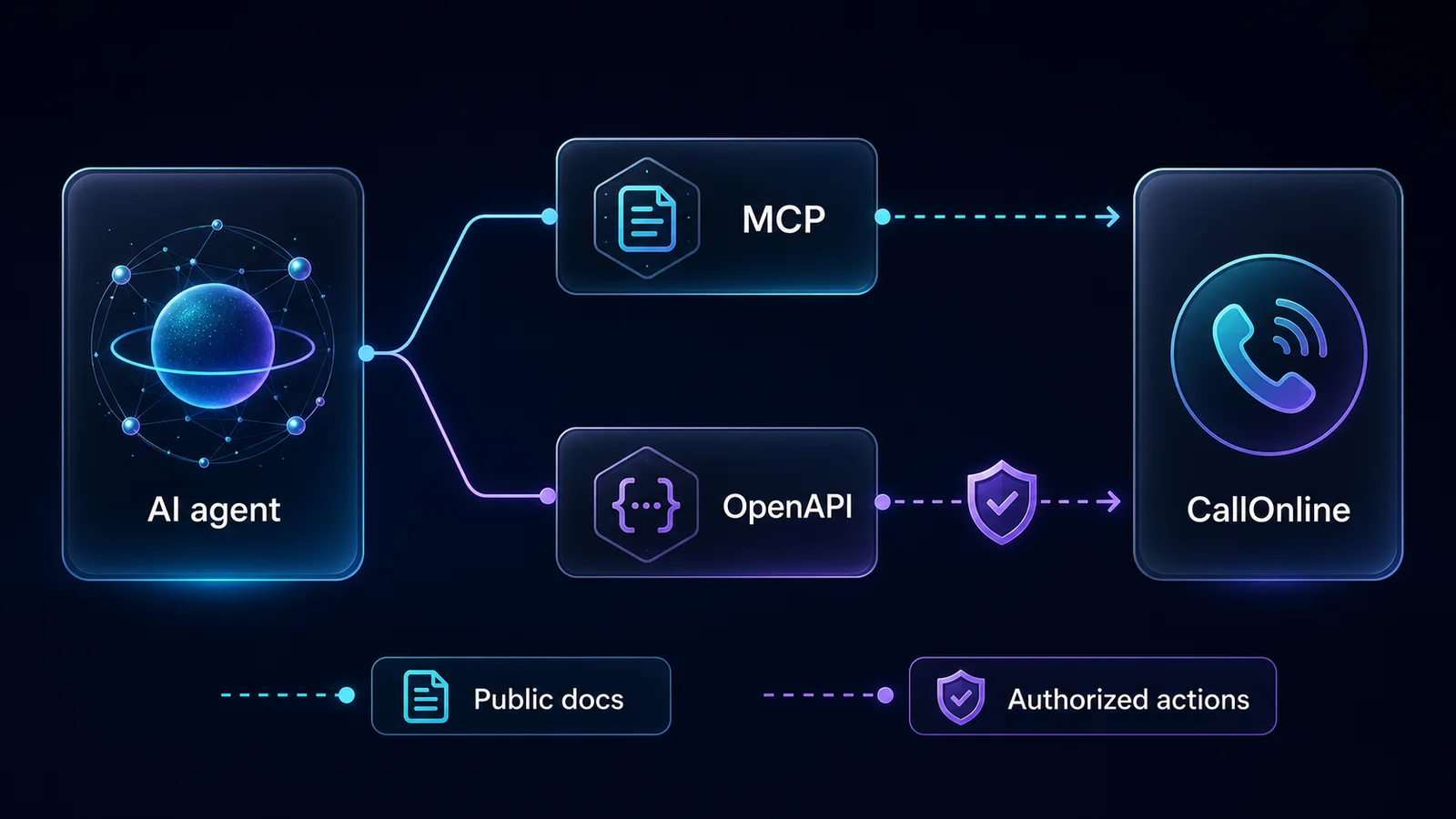
- Integration surfaces: REST, OpenAPI, MCP, SDK examples, and event webhooks.
- Account connection: API access, usage, and credits are connected to App9 Account.
- Important limitation: having a calling API does not remove the caller’s consent, disclosure, do-not-call, recordkeeping, or state-law responsibilities.
The central idea: treat a call like a structured agent task
CallOnline is not presented as a browser dial pad for a person. The main interface is an API: an agent or application sends a calling task, CallOnline manages the phone-session layer, and the result returns to the originating workflow.
The public page shows a five-part path:
- Your agent or application decides that a call is needed and supplies the task context.
- The CallOnline API receives the authorized request and handles the calling tools and routing.
- The phone network connects the call.
- The recipient answers and participates in the conversation.
- The outcome returns as artifacts such as a transcript, summary, status event, or structured result.
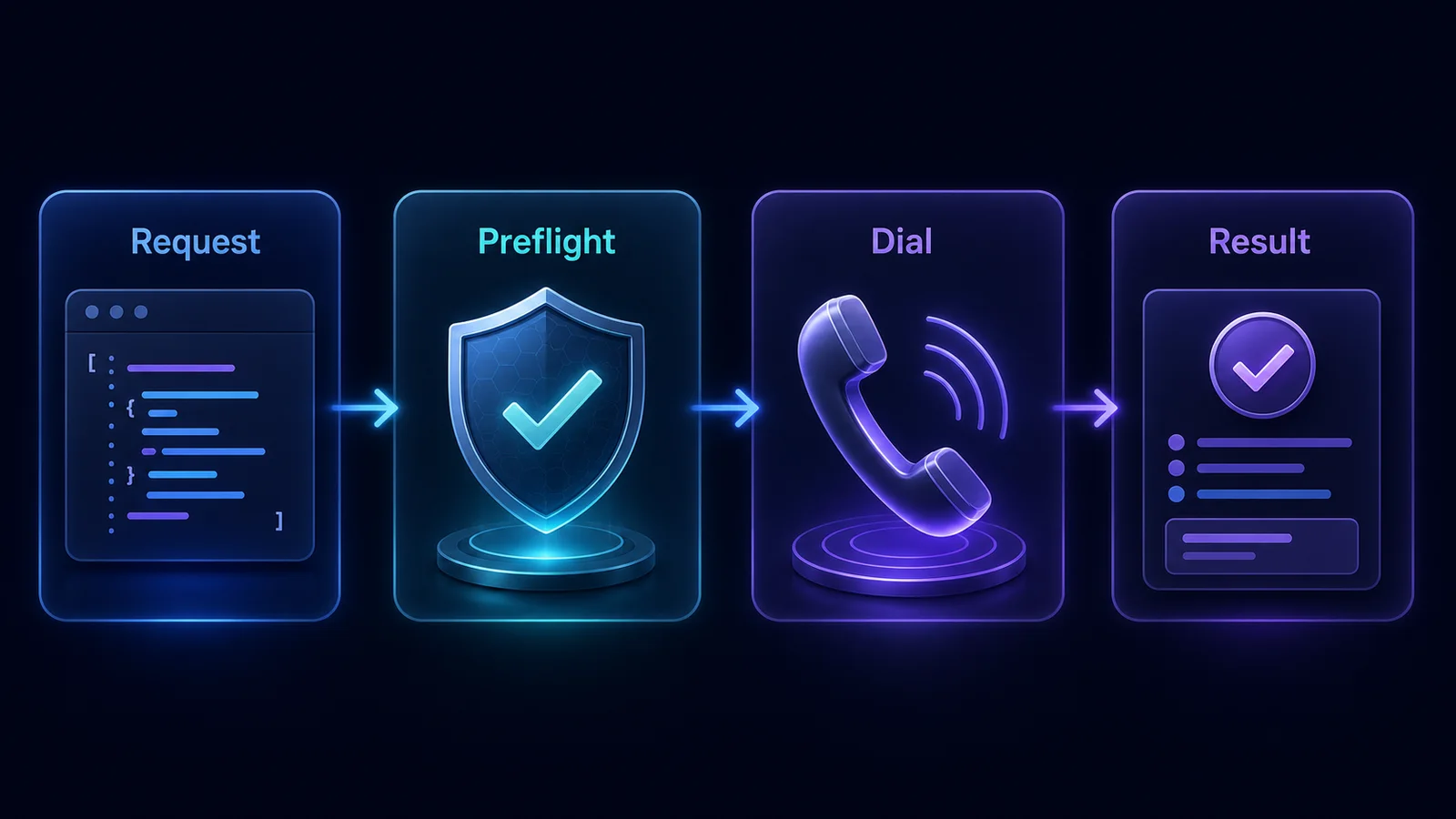
That return path is what separates an agent-oriented calling service from a simple click-to-call button. A developer can listen for call events, receive a transcript or summary, and decide what should happen next—without treating the conversation as an isolated activity.
What the public interface says CallOnline can do
The CallOnline product page groups its features into three practical areas.
Calling and conversation outcomes
The site lists inbound and outbound calling, callbacks, scheduling, voicemail detection, transcripts, summaries, and structured results. Those capabilities support workflows such as an appointment reminder, a consented customer follow-up, or a scheduled callback—provided the organization has a lawful basis and an appropriate operating process for the call.
Developer and agent integration
CallOnline publishes links for an OpenAPI specification, MCP access, API documentation, SDK examples, and webhooks. The public API preview shows a call request producing an identifier and status, followed by lifecycle events such as initiated, ringing, answered, and transcript-ready.
This matters because an agent should not have to infer whether a call succeeded by reading an unstructured log. An event-driven workflow can wait for the relevant status and then act on the returned result.
Usage and purchasing
The product connects access and metered usage to App9 Account. Its public page displays credit packages and per-minute ranges, but those amounts are dynamic. Check the current CallOnline pricing section before estimating a real campaign rather than relying on figures copied into a review.
What deserves extra attention before any automated call
Calling capability and permission to call are different questions. The CallOnline page mentions disclosure controls, do-not-call and quiet-hour checks, PII-protection options, and audit controls. Those are useful product-level safeguards, but the organization initiating the call still needs to determine which federal, state, industry, and contractual rules apply.
For U.S. calls, two official sources belong in the planning checklist:
- The FCC’s 2024 declaratory ruling explains that current AI-generated human voices fall within the TCPA’s restrictions on artificial or prerecorded voice calls. It discusses prior express consent, subject to applicable exceptions and exemptions.
- The FTC’s telemarketing guidance covers the Telemarketing Sales Rule, the National Do Not Call Registry, prerecorded calls, and related business responsibilities.
That means a responsible implementation starts before the API request. The team should document consent, identify the calling purpose and responsible business, maintain do-not-call processes, respect calling hours, plan required disclosures, protect transcripts and personal information, and define how a recipient can opt out or reach a person.
This article is an editorial product overview, not legal advice. Organizations should obtain qualified advice for their calling use case and jurisdictions.
Who CallOnline appears best for
| Potential fit | Why | What to confirm first |
|---|---|---|
| Developer-built agent workflows | REST, OpenAPI, MCP, webhooks, and structured outcomes are first-class parts of the public product. | Authentication, supported call path, test environment, and current pricing. |
| Consented reminders and callbacks | Scheduling, callback, and transcript features map naturally to follow-up tasks. | Consent, disclosure, quiet hours, opt-out handling, and data retention. |
| Workflows that need machine-readable outcomes | Events, summaries, transcripts, and JSON can feed later automation. | Accuracy requirements and the human-review path when results are incomplete. |
CallOnline is a less natural fit for someone seeking a conventional personal dialer or for a team looking to launch high-volume cold calling without a carefully reviewed compliance program. The public interface is developer-oriented, and phone automation is a domain where operational discipline matters as much as the API.
Our take
CallOnline’s clearest idea is not merely “AI can make a call.” It is that a phone conversation can become a controlled step inside a larger agent workflow, with events and structured results returning to the software that requested it.
The public page provides a clear map of the intended workflow and the available integration surfaces. A deeper evaluation would still need an authorized test call, a defined consent scenario, and measurements for connection behavior, voice quality, transcription, latency, and outcome accuracy.
You can explore CallOnline, review its public documentation, and check current access and pricing. If you are designing a broader agent or web application around a workflow like this, App9 Builder is the App9 workspace for creating and managing web projects.